
WPSlash
  • Install Updates – V9.1 SP2 → latest HF (Hotfix) from Siemens support.
  • Configure Windows Firewall / Domain – for multi-station communication.

  • .NET Framework: 3.5 SP1 + 4.8
  • SQL Server: 2017 Standard or Enterprise (for OS server)
  • | Feature | Description | |---------|-------------| | Multiproject Server | Centralized multi-user engineering with automatic replication. | | Web Server | Web-based monitoring without additional Web License (basic HTML5). | | PDM Integration | Process Device Manager V9.2 for HART/PA devices integrated in CFC. | | APL (Advanced Process Library) | Enhanced blocks: PID, motor, valve with integrated OPC UA. | | OPC UA DA & AE | Native server included (no extra license). | | Route Control | Improved batch/movement control for material transport. |


    PCS 7 uses floating licenses managed by the Automation License Manager (ALM).

  • Transfer licenses from the USB Stick/Network Server to the local drive or a License Server.

  • To get the best performance from your system:


    SIMATIC PCS 7 (Process Control System 7) is Siemens’ traditional DCS. Version 9.1 SP2 sits at the peak of the classic PCS 7 lineage. It is a hybrid system that combines the robustness of programmable logic controllers (specifically the S7-400 series) with the advanced visualization of the WinCC SCADA platform.

    V9.1 SP2 is particularly significant because it supports Windows Server 2019/2022 and Windows 10/11 (Enterprise LTSC) for engineering and runtime environments. For plant operators locked into a Windows update cycle, SP2 provides a legal, supported path forward without a full system overhaul.

    Key Distinction: Unlike the newer PCS neo (which is web-based and cloud-ready), PCS 7 V9.1 SP2 is a Windows-native, client-server architecture. It is favored for high-performance, deterministic control where sub-millisecond response times are required.


    Siemens PCS 7 V9.1 SP2 is not the flashiest DCS on the market, but it is arguably the most reliable and battle-tested version of the classic PCS 7 line. It bridges the gap between the retiring S7-400 platform and the future of process automation.

    For brownfield plants (upgrading existing facilities), SP2 is the final software version that allows you to extend the life of your S7-400 controllers without replacing racks or rewiring field devices.

    For small to medium greenfield projects (under 10,000 I/O), SP2 offers lower total cost of ownership compared to PCS neo, combined with deterministic real-time control that cloud-native platforms cannot guarantee.

    Final Verdict: If your plant runs on Windows 10, requires extensive S7-400 support, or you cannot tolerate web-native latency, download Siemens PCS 7 V9.1 SP2 from the Siemens Industry Online Support (SIOS). Just remember to schedule a three-day validation window for your migration.


    Looking for support? Siemens offers the „PCS 7 Service & Support“ contract for V9.1 SP2, including remote diagnostics and hotfix delivery. Always run the latest Hotfix (HF2 as of this writing) to avoid WinCC runtime crashes during trend queries.

    The "story" of SIMATIC PCS 7 V9.1 SP2 is one of transition—it represents a refined peak of Siemens’ traditional distributed control system (DCS) architecture, bridging the gap between legacy industrial automation and the modern digital enterprise. 1. The Core Identity: What is PCS 7?

    SIMATIC PCS 7 is a Distributed Control System (DCS) designed for complex process industries like oil and gas, pharmaceuticals, and chemicals. Unlike standard PLC systems that handle discrete tasks, PCS 7 manages entire plants by integrating HMI (WinCC), engineering, and controllers into one unified database. 2. The Significance of V9.1 SP2

    Released as a mid-cycle update, Service Pack 2 (SP2) focused on stability, security, and hardware compatibility. Its primary "plot points" include:

    Operating System Evolution: This version solidified support for Windows 10 Enterprise LTSC 2019 and Windows Server 2019, ensuring that long-term industrial plants could remain on supported Microsoft platforms.

    Hardware Modernization: It introduced better integration for the SIMATIC ET 200SP HA (High Availability) and CFU (Compact Field Unit) hardware, which are designed to reduce footprint and wiring in the field.

    Proactive Security: SP2 included critical security patches to protect against evolving cyber threats, a necessity for critical infrastructure. 3. Technical Distinction

    While older Siemens systems (like Step 7) use Ladder logic, V9.1 SP2 relies on high-level tools like Continuous Function Charts (CFC) and Sequential Function Charts (SFC). This allows engineers to "storyboard" a chemical process visually rather than writing thousands of lines of code. 4. The "Next Chapter"

    The industry is currently moving toward SIMATIC PCS neo, a web-based, completely reimagined DCS. However, V9.1 SP2 remains the "reliable workhorse" for thousands of existing plants that require the proven stability of the PCS 7 architecture while they plan their multi-decade transition to fully digitalized systems. 1 SP2 or how it compares to the newer PCS neo?

    Difference between PCS7 and S7-400 series - SiePortal - Siemens

    Siemens SIMATIC PCS 7 V9.1 SP2 (Service Pack 2) is a mature update to Siemens' flagship distributed control system (DCS), focused on quality improvements, enhanced cybersecurity, and expanded hardware support. It serves as a critical bridge for plant operators seeking long-term stability and modern digital integration. www.industry-mobile-support.siemens-info.com Key Technical Enhancements Engineering Performance : Improved efficiency in the Logic Matrix (LM) Editor

    with faster Cut/Paste/Undo operations and more intuitive message formats for alarms. Modular Automation : Extended support for Module Type Package (MTP)

    via PCS 7/Open OS, enabling easier integration of independent Package Units (PEA) into the Process Orchestration Layer (POL). Fail-safe Integration : Fully supports SIMATIC ET 200SP HA

    failsafe modules (SIL 3 certified), allowing for safety-related communication via PROFIsafe on the same platform as standard I/O. Asset Management : Integration of the Condition Monitoring Library (CML)

    directly into the Advanced Process Library (APL) for better monitoring of pumps, valves, and mechanical components. Security and Operating Systems

    PCS 7 V9.1 SP2 is built for modern industrial security standards, supporting robust authentication and updated antivirus protocols.

    Note: This version is considered legacy (general availability ended around 2021-2022). Siemens now recommends PCS 7 V10.x or the new SIMATIC PCS neo. Use this guide for maintenance of existing plants or specific OEM requirements.


    Why upgrade to SP2 specifically?

    The air in the Control Room of the Oakhaven Water Treatment Plant was thick with the hum of servers and the smell of ozone.

    , the lead automation engineer, stared at his monitors. For years, the plant had run on an aging version of SIMATIC PCS 7 , but today was the "Go-Live" for the upgrade to Version 9.1 SP2

    This wasn’t just a routine patch; it was a leap into the future of their infrastructure. The Migration Elias remembered the months of prep. Moving to meant embracing the

    standard fully. He had spent weeks in the engineering station, utilizing the updated Plant Automation Accelerator (PAA) to map out the digital twin of the entire facility.

    "Everything looks green on the redundant servers," his junior engineer, Sarah, noted. She was clicking through the new SIMATIC Management Console

    , which made deploying the Service Pack across their fifty workstations feel less like a marathon and more like a sprint. The Breakthrough Suddenly, a high-priority alarm flashed on the screen: Sedimentation Tank 4 – Communication Loss.

    In the old days, this would have meant a frantic physical inspection. But Elias opened the Maintenance Station

    . Thanks to the enhanced diagnostics in SP2, he didn't just see a "fault"—he saw the exact heartbeat of the ET 200SP HA remote I/O module.

    "It’s not a hardware failure," Elias said, pointing to the screen. "It’s a configuration mismatch from the old field device we replaced yesterday. Look at the CFC (Continuous Function Chart) With the improved Selective Download

    feature of V9.1, he didn't have to stop the entire CPU to fix it. He tweaked the block parameters, hit download, and watched as the logic synchronized in milliseconds. The alarm vanished. The tank began to stir. The Future-Proof Plant

    By sunset, the plant wasn't just running; it was breathing. The

    instrumentation was feeding data into the system with more precision than ever, and the cybersecurity layers of SP2 acted as a silent digital fortress around their operations.

    Elias leaned back, watching the HMI screens glow. They had moved beyond just "controlling" a plant. With the integration of

    , they had created a system that was scalable, secure, and ready for whatever the next decade of industrial evolution would throw at them. "Smooth sailing?" Sarah asked, packing her bag. "Better," Elias replied. "It's optimized." of SP2 or perhaps a troubleshooting guide for a real-world migration? AI responses may include mistakes. Learn more

    Latest Plugins

    View all plugins

    Latest Documentation

    View all documentation

    Sp2 | Siemens Pcs7 V9.1

  • Install Updates – V9.1 SP2 → latest HF (Hotfix) from Siemens support.
  • Configure Windows Firewall / Domain – for multi-station communication.

  • .NET Framework: 3.5 SP1 + 4.8
  • SQL Server: 2017 Standard or Enterprise (for OS server)
  • | Feature | Description | |---------|-------------| | Multiproject Server | Centralized multi-user engineering with automatic replication. | | Web Server | Web-based monitoring without additional Web License (basic HTML5). | | PDM Integration | Process Device Manager V9.2 for HART/PA devices integrated in CFC. | | APL (Advanced Process Library) | Enhanced blocks: PID, motor, valve with integrated OPC UA. | | OPC UA DA & AE | Native server included (no extra license). | | Route Control | Improved batch/movement control for material transport. |


    PCS 7 uses floating licenses managed by the Automation License Manager (ALM).

  • Transfer licenses from the USB Stick/Network Server to the local drive or a License Server.

  • To get the best performance from your system:


    SIMATIC PCS 7 (Process Control System 7) is Siemens’ traditional DCS. Version 9.1 SP2 sits at the peak of the classic PCS 7 lineage. It is a hybrid system that combines the robustness of programmable logic controllers (specifically the S7-400 series) with the advanced visualization of the WinCC SCADA platform.

    V9.1 SP2 is particularly significant because it supports Windows Server 2019/2022 and Windows 10/11 (Enterprise LTSC) for engineering and runtime environments. For plant operators locked into a Windows update cycle, SP2 provides a legal, supported path forward without a full system overhaul.

    Key Distinction: Unlike the newer PCS neo (which is web-based and cloud-ready), PCS 7 V9.1 SP2 is a Windows-native, client-server architecture. It is favored for high-performance, deterministic control where sub-millisecond response times are required.


    Siemens PCS 7 V9.1 SP2 is not the flashiest DCS on the market, but it is arguably the most reliable and battle-tested version of the classic PCS 7 line. It bridges the gap between the retiring S7-400 platform and the future of process automation.

    For brownfield plants (upgrading existing facilities), SP2 is the final software version that allows you to extend the life of your S7-400 controllers without replacing racks or rewiring field devices.

    For small to medium greenfield projects (under 10,000 I/O), SP2 offers lower total cost of ownership compared to PCS neo, combined with deterministic real-time control that cloud-native platforms cannot guarantee.

    Final Verdict: If your plant runs on Windows 10, requires extensive S7-400 support, or you cannot tolerate web-native latency, download Siemens PCS 7 V9.1 SP2 from the Siemens Industry Online Support (SIOS). Just remember to schedule a three-day validation window for your migration.


    Looking for support? Siemens offers the „PCS 7 Service & Support“ contract for V9.1 SP2, including remote diagnostics and hotfix delivery. Always run the latest Hotfix (HF2 as of this writing) to avoid WinCC runtime crashes during trend queries. Siemens Pcs7 V9.1 Sp2

    The "story" of SIMATIC PCS 7 V9.1 SP2 is one of transition—it represents a refined peak of Siemens’ traditional distributed control system (DCS) architecture, bridging the gap between legacy industrial automation and the modern digital enterprise. 1. The Core Identity: What is PCS 7?

    SIMATIC PCS 7 is a Distributed Control System (DCS) designed for complex process industries like oil and gas, pharmaceuticals, and chemicals. Unlike standard PLC systems that handle discrete tasks, PCS 7 manages entire plants by integrating HMI (WinCC), engineering, and controllers into one unified database. 2. The Significance of V9.1 SP2

    Released as a mid-cycle update, Service Pack 2 (SP2) focused on stability, security, and hardware compatibility. Its primary "plot points" include:

    Operating System Evolution: This version solidified support for Windows 10 Enterprise LTSC 2019 and Windows Server 2019, ensuring that long-term industrial plants could remain on supported Microsoft platforms.

    Hardware Modernization: It introduced better integration for the SIMATIC ET 200SP HA (High Availability) and CFU (Compact Field Unit) hardware, which are designed to reduce footprint and wiring in the field.

    Proactive Security: SP2 included critical security patches to protect against evolving cyber threats, a necessity for critical infrastructure. 3. Technical Distinction

    While older Siemens systems (like Step 7) use Ladder logic, V9.1 SP2 relies on high-level tools like Continuous Function Charts (CFC) and Sequential Function Charts (SFC). This allows engineers to "storyboard" a chemical process visually rather than writing thousands of lines of code. 4. The "Next Chapter"

    The industry is currently moving toward SIMATIC PCS neo, a web-based, completely reimagined DCS. However, V9.1 SP2 remains the "reliable workhorse" for thousands of existing plants that require the proven stability of the PCS 7 architecture while they plan their multi-decade transition to fully digitalized systems. 1 SP2 or how it compares to the newer PCS neo?

    Difference between PCS7 and S7-400 series - SiePortal - Siemens

    Siemens SIMATIC PCS 7 V9.1 SP2 (Service Pack 2) is a mature update to Siemens' flagship distributed control system (DCS), focused on quality improvements, enhanced cybersecurity, and expanded hardware support. It serves as a critical bridge for plant operators seeking long-term stability and modern digital integration. www.industry-mobile-support.siemens-info.com Key Technical Enhancements Engineering Performance : Improved efficiency in the Logic Matrix (LM) Editor Install Updates – V9

    with faster Cut/Paste/Undo operations and more intuitive message formats for alarms. Modular Automation : Extended support for Module Type Package (MTP)

    via PCS 7/Open OS, enabling easier integration of independent Package Units (PEA) into the Process Orchestration Layer (POL). Fail-safe Integration : Fully supports SIMATIC ET 200SP HA

    failsafe modules (SIL 3 certified), allowing for safety-related communication via PROFIsafe on the same platform as standard I/O. Asset Management : Integration of the Condition Monitoring Library (CML)

    directly into the Advanced Process Library (APL) for better monitoring of pumps, valves, and mechanical components. Security and Operating Systems

    PCS 7 V9.1 SP2 is built for modern industrial security standards, supporting robust authentication and updated antivirus protocols.

    Note: This version is considered legacy (general availability ended around 2021-2022). Siemens now recommends PCS 7 V10.x or the new SIMATIC PCS neo. Use this guide for maintenance of existing plants or specific OEM requirements.


    Why upgrade to SP2 specifically?

    The air in the Control Room of the Oakhaven Water Treatment Plant was thick with the hum of servers and the smell of ozone.

    , the lead automation engineer, stared at his monitors. For years, the plant had run on an aging version of SIMATIC PCS 7 , but today was the "Go-Live" for the upgrade to Version 9.1 SP2

    This wasn’t just a routine patch; it was a leap into the future of their infrastructure. The Migration Elias remembered the months of prep. Moving to meant embracing the the lead automation engineer

    standard fully. He had spent weeks in the engineering station, utilizing the updated Plant Automation Accelerator (PAA) to map out the digital twin of the entire facility.

    "Everything looks green on the redundant servers," his junior engineer, Sarah, noted. She was clicking through the new SIMATIC Management Console

    , which made deploying the Service Pack across their fifty workstations feel less like a marathon and more like a sprint. The Breakthrough Suddenly, a high-priority alarm flashed on the screen: Sedimentation Tank 4 – Communication Loss.

    In the old days, this would have meant a frantic physical inspection. But Elias opened the Maintenance Station

    . Thanks to the enhanced diagnostics in SP2, he didn't just see a "fault"—he saw the exact heartbeat of the ET 200SP HA remote I/O module.

    "It’s not a hardware failure," Elias said, pointing to the screen. "It’s a configuration mismatch from the old field device we replaced yesterday. Look at the CFC (Continuous Function Chart) With the improved Selective Download

    feature of V9.1, he didn't have to stop the entire CPU to fix it. He tweaked the block parameters, hit download, and watched as the logic synchronized in milliseconds. The alarm vanished. The tank began to stir. The Future-Proof Plant

    By sunset, the plant wasn't just running; it was breathing. The

    instrumentation was feeding data into the system with more precision than ever, and the cybersecurity layers of SP2 acted as a silent digital fortress around their operations.

    Elias leaned back, watching the HMI screens glow. They had moved beyond just "controlling" a plant. With the integration of

    , they had created a system that was scalable, secure, and ready for whatever the next decade of industrial evolution would throw at them. "Smooth sailing?" Sarah asked, packing her bag. "Better," Elias replied. "It's optimized." of SP2 or perhaps a troubleshooting guide for a real-world migration? AI responses may include mistakes. Learn more


    Elta Courier Voucher for WooCommerce

    Installation Download the .zip file from your WooCommerce account. Go to: WordPress Admin > Plugins > Add New and Upload Plugin with the…
    October 17, 2019

    Geniki Taxydromiki Voucher for WooCommerce

    Installation Download the .zip file from your WooCommerce account. Go to: WordPress Admin > Plugins > Add Newand Upload Pluginwith the…
    October 3, 2019

    Latest from the Blog

    View all posts

    Featured Plugin

    WooFood
    Featured
    $499

    WooFood

    WooCommerce Restaurant Ordering Plugin

    (5.0)

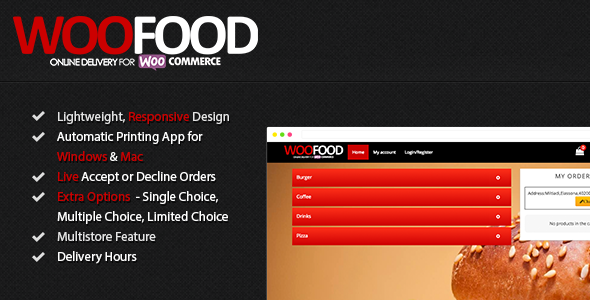
    WooCommerce Ordering Plugin for WordPress WooFood is an all in an online food ordering system for your restaurant  business. Including everything you need to run your Food Delivery business on your  WooCommerce site. A lightweight and responsive  Theme and the  Automatic Order Printing…

    View Plugin Details

    Need Help With Your WordPress Site?

    Our support team is ready to help you with any questions or issues you might have.