|
CAD for leather goods and small leather goods |  |
 |
 |
|
CAD for leather goods and small leather goods | |
|
|
| Mozart | Liszt | Virtual-Design | Support | Contacts |
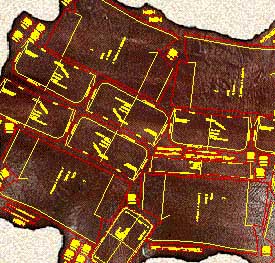
| Mozart is a CAD realized following the requests and
suggestions of leather goods pattern-makers to simplify and expand their work being
them free to design according to their ideas. Mozart requires AutoCAD® or ZWCAD®. The license of Mozart does not include the license of AutoCAD® or ZWCAD® Mozart 8 is available for AutoCAD® up to version 2026 and for ZWCAD® up to version 2025. |
|
Quick learning Built on pattern-makers' requirements Mozart shares his working method giving full liberty to design the model. The pattern-maker can concentrate himself on the model to be realized. He does not have to code the materials or pieces before or during the drawing. Freely customizable The user can easily change many settings of Mozart: colors, the method of calculating the bill of materials and the bill of working times and many other parameters. Mozart can also load and use custom toolbars, scripts and commands written by the user. |
|
|
Flexibility The user is free to choose the names of the patterns and their hierarchy. Each pattern is a single file and Brands, Lines, Seasons etc. can be organized by folders. Each pattern is independent from the others and can be copied or moved in whole or in part from one folder to another like any other file. The bill of materials and the bill of working times can be performed in different ways and the reports are produced as ASCII text or Excel document. |
|
Data exchange The patterns can be read using many others CAD programs. The cutting can be done using a wide range of machines from vertical or flatbed plotters to knife, laser or water-jet cutting machines. The bill of materials, the bill of accessories and the bill of working times can be exported to others data management systems. Development The open structure of Mozart means it can be constantly improved according to users suggestions and requests. The upgrade of Mozart does not oblige the user to upgrade the other components of the CAD system. Plug-ins increase the power and the flexibility of Mozart. |
|
| Plug-ins add specific functions to Mozart. The user himself can write his own plug-ins, Mozart will automatically load them. Plug-ins allow to customize Mozart's installations to the needs of the user and reduce the cost because they avoid the purchase of what is not needed. Users can request the development of personal plug-ins to create special reports or drawing functions. On request personal plug-ins are not available to other users in order to protect their confidentiality. |
If you need the information in Genomes 4 but cannot afford the hardcover, you have several legal options that are superior to searching for a risky PDF.
The rain in Sector 7 didn't wash the grime away; it just made the neon lights bleed into the pavement. Kael sat in the corner of the abandoned server room, his breath hitching in his throat. On the table before him lay the prize: a battered, waterlogged tablet.
It was an artifact from the "Hardcopy Era." The label on the back was faded, but Kael could just make out the inscription: Property of T.A. Brown - Genomes 4.
To the uninitiated, it was just a heavy slab of plastic and glass. To the Bio-Traffickers hunting him, it was the Holy Grail. To Kael, it was the only way to save his sister.
"Upload at 90%," the AI whispered in his earpiece. "Hurry, Kael. The Code-Breakers are triangulating your signal."
Kael’s sister, Elara, was fading fast. She had been born with a genetic defect that the modern Gene-Casters couldn't fix. They said her DNA was "corrupted beyond repair," a jumbled mess of code that no modern patch could fix. But Kael had found the old forums, the deep-web archives where the elders spoke of the "Foundational Texts."
They spoke of a time before Gene-Casting was automated by the Corporations. A time when humans actually understood the machinery of life, rather than just hitting "print" on a DNA sequencer.
"Genomes 4," Kael whispered, tapping the cracked screen. "Show me the schematic."
The screen flickered. A jagged, primitive interface appeared. No holograms, no 3D models—just flat, static text and diagrams. It was beautiful. It showed the raw structure of life: chromosomes, DNA replication, gene expression. It didn't offer a quick fix; it offered the map.
He scrolled frantically to Chapter 14: Genome Replication. The modern algorithms always skipped the "junk DNA," treating it as useless filler. But the Brown text highlighted it in stark, digital black and white. It wasn't junk. It was the boot code.
"I see it," Kael muttered, his fingers flying over his portable sequencer. "The modern patches are ignoring the initiator codons in the heterochromatin. Elara’s DNA isn't broken; it’s just... paused."
He began to type a new sequence, translating the archaic knowledge from the PDF into a modern viral vector.
"Upload complete," the AI said. "Target acquired: 50 meters."
The door to the server room blasted open. Three Code-Breakers stepped in, their eyes glowing with optical implants.
"Step away from the hardware, kid," the lead Breaker growled, leveling a pulse-rifle. "That data belongs to the Archives. It's dangerous. It tells people how to build life without a license." genomes 4 ta brown pdf
Kael didn't look up. He hit Execute on the sequencer. A tiny vial of blue liquid glowed on the dock next to the tablet.
"It doesn't just tell us how to build it," Kael said, grabbing the vial and shoving the tablet into his bag. "It tells us how to fix it."
He vaulted out the window just as the pulse-fire shattered the table behind him.
Hours later, in the safety of the underground clinic, Kael watched the monitor. Elara’s vitals had stabilized. The "useless" code in her genes had sparked back to life, guiding her cells to repair the damage that the modern world had deemed fatal.
Kael looked at the cracked tablet in his hands. He opened the file again, staring at the simple, static text. In a world of glossy, automated lies, the old PDF was the only thing that told the truth.
He turned the page to Chapter 1. There was still a lot to learn.
Unlocking the Secrets of Genomes: A Comprehensive Review of "Genomes 4th Edition" by Terry Brown
The study of genomes has revolutionized our understanding of the intricate mechanisms that govern life on Earth. The field of genomics, which involves the analysis of the structure, function, and evolution of genomes, has made tremendous progress in recent years. One of the leading textbooks that has been at the forefront of this revolution is "Genomes 4th Edition" by Terry Brown. In this blog post, we will provide a detailed review of this seminal textbook, exploring its contents, key concepts, and significance in the field of genomics.
Introduction to Genomes and Genomics
Before diving into the specifics of the textbook, let's take a brief look at the basics of genomes and genomics. A genome is the complete set of DNA within an organism, including all of its genes and non-coding regions. Genomics, on the other hand, is the study of genomes, aiming to understand their structure, function, and evolution. The field of genomics has far-reaching implications in fields such as medicine, agriculture, and biotechnology.
Overview of "Genomes 4th Edition" by Terry Brown
"Genomes 4th Edition" by Terry Brown is a comprehensive textbook that provides an in-depth exploration of the structure, function, and evolution of genomes. The textbook has been widely adopted by students and researchers in the field of genomics and has become a standard reference in the field.
The textbook is divided into 10 chapters, each covering a specific aspect of genomics. The chapters are:
Key Concepts and Takeaways
Throughout the textbook, Terry Brown provides a clear and concise explanation of complex concepts, making it accessible to readers with varying levels of background knowledge. Some of the key concepts and takeaways from the textbook include:
Conclusion
"Genomes 4th Edition" by Terry Brown is a comprehensive and authoritative textbook that provides a detailed exploration of the structure, function, and evolution of genomes. The textbook has become a standard reference in the field of genomics and is widely adopted by students and researchers. With its clear and concise explanations, the textbook provides a valuable resource for anyone interested in understanding the intricacies of genomes and the field of genomics.
Download "Genomes 4th Edition" by Terry Brown PDF
If you're interested in downloading a PDF copy of "Genomes 4th Edition" by Terry Brown, you can try searching online for a free PDF version or purchase a digital copy from a reputable online retailer. Please note that downloading copyrighted materials without permission may be illegal, so be sure to explore legitimate options.
FAQs
Q: What is the focus of "Genomes 4th Edition" by Terry Brown? A: The textbook provides a comprehensive exploration of the structure, function, and evolution of genomes.
Q: Who is the target audience for the textbook? A: The textbook is aimed at students and researchers in the field of genomics, as well as anyone interested in understanding the intricacies of genomes.
Q: What are some of the key concepts covered in the textbook? A: The textbook covers a range of topics, including genome size and complexity, gene regulation and expression, evolution of genomes, and applications of genomics.
Understanding Genomes 4 by T.A. Brown: A Comprehensive Guide
The keyword "genomes 4 ta brown pdf" refers to the digital version of the fourth edition of Genomes, a seminal textbook authored by T.A. Brown. Published in 2018 by Garland Science (now part of CRC Press), this book is widely regarded as a modern cornerstone for students and researchers in molecular biology, genetics, and bioinformatics. Core Philosophy and Structure
Unlike traditional genetics textbooks that focus heavily on classical Mendelian inheritance, Genomes 4 adopts a genomics-first approach. It prioritizes how genomes are studied and mapped before delving into their expression and evolution. The book is organized into four main parts:
Studying Genomes: Covers techniques like DNA manipulation, mapping, sequencing, and genome annotation.
Genome Anatomies: Explores the physical structure of eukaryotic, prokaryotic, and viral genomes. If you need the information in Genomes 4
Genome Function: Focuses on how genomes are expressed, including transcriptomes and proteomes.
Genome Evolution: Discusses how genomes change over time and the mechanisms of molecular evolution. Key Features of the Fourth Edition
The fourth edition was a complete revision to include major breakthroughs from the decade following the third edition. Notable updates include: Genomes 4 | T. Brown - Taylor & Francis eBooks
These are the functional units—the sequences that code for proteins. Surprisingly, in complex eukaryotes like humans, these make up a tiny fraction of the total DNA (less than 2%). These are the "jewels" of the genome, highly conserved and crucial for survival.
In the rapidly evolving field of molecular biology, few textbooks have achieved the iconic status of Genomes by Terence A. Brown. Now in its fourth edition, colloquially known as "Genomes 4," this volume has served as the essential gateway for students, researchers, and enthusiasts seeking to understand the complex architecture of DNA.
If you have searched for the phrase "genomes 4 ta brown pdf" , you are likely part of a large community looking for a digital copy of this seminal work. This article will provide a detailed overview of the book’s content, its significance in the biosciences, the legal and ethical landscape surrounding PDF distribution, and legitimate pathways to access the material.
The contrast between a bacterial genome (prokaryote) and a human genome (eukaryote) is like comparing a tiny, efficient studio apartment to a sprawling, cluttered mansion.
Prokaryotes (The Minimalists):
Eukaryotes (The Accumulators):
If you manage to access the PDF legally, you will need to cite it. The correct citation format (APA 7th) is:
Brown, T. A. (2018). Genomes 4 (4th ed.). Garland Science.
For in-text citations: (Brown, 2018, p. 245).
Amazon and Chegg offer digital rentals of Genomes 4 for a fraction of the purchase price (often $30-$40 for 180 days). This is cheaper than buying a coffee per week.
While the full book may not be free, Google Books provides a substantial preview of Genomes 4. You can read entire sections, which is often enough for homework questions. Key Concepts and Takeaways Throughout the textbook, Terry
All product names, brand names or trademarks named here belong to their respective holders. |