Even the best electrode will fail if handled incorrectly. Follow these guidelines for optimal performance.
When applying stainless steel cladding to a carbon steel base, welders first deposit a layer of E309 (the buttering layer) on the carbon steel. Once this buffer is in place, subsequent layers of 308 or 316 can be applied without risk of carbon migration or cracking.
To understand why GDP E309 is used for specific jobs, you must first look at its metallurgy. The "309" designation refers to the nominal composition of the weld metal.
Problem: Weld cracking along the toe of the weld.
Cause: Too much dilution from the carbon steel base metal.
Solution: Use a "buttering" technique. Run a thin layer of E309 on the carbon steel edge first, let it cool, then weld the stainless steel to the buttered layer.
Problem: "Wagon tracks" or slag inclusions.
Cause: Insufficient interpass cleaning.
Solution: E309 produces a heavy, glassy slag. Use a wire brush or grinder after every pass.
Problem: Spatter sticking to the stainless steel side.
Cause: Amperage too high or arc blow.
Solution: Reduce amperage by 10-15%. Switch to AC if arc blow persists on DC.
GDP E309 refers to a specific type of stick electrode (SMAW – Shielded Metal Arc Welding) used primarily for welding austenitic stainless steels to carbon steels or low-alloy steels. The "GDP" prefix typically denotes a specific manufacturer's brand line (historically linked to companies like Gedik Welding or similar industrial brands in the EU and Asian markets), while "E309" follows the American Welding Society (AWS) classification system.
Under the AWS A5.4 specification, an E309 electrode produces a weld metal that is approximately 23% Chromium (Cr) and 13% Nickel (Ni). This specific chemistry places it between standard 308 (18-8) and 310 (25-20) stainless steels.
In the world of industrial manufacturing, heavy fabrication, and repair welding, the selection of the correct consumable electrode is critical to the integrity of the final structure. Among the vast catalog of welding electrodes, the classification GDP E309 frequently appears on material data sheets and procurement lists. But what exactly is GDP E309, and why is it a staple for dissimilar metal welding?
This article provides a comprehensive deep dive into the GDP E309 electrode, covering its chemical makeup, mechanical properties, practical applications, and international equivalents.
| Symptom | Possible Cause | Solution |
| :--- | :--- | :--- |
| Arc wandering | Moisture in coating or magnetic blow | Re-dry electrodes; use AC or shorter arc |
| Porosity | Dirty base metal (oil/moisture) | Clean joint; check gas coverage (if GTAW) |
| Cracking in HAZ | Too much dilution from carbon steel | Use a buffer layer; reduce heat input |
| Slag sticking | Incorrect current (too low) | Increase amps by 10-15% |
GDP E309 (commonly written as “GDP E-309”) is a compact but historically significant identifier that appears in different technical and regulatory contexts. This guide explains what GDP E309 refers to, why it matters, where you’ll encounter it, and how to interpret its implications—clearly and without unnecessary jargon.
Summary
Where you’ll find GDP E309 (common contexts)
Standards and regulatory references
Laboratory tests and protocols
Regulatory filings and product dossiers (pharmaceutical/chemical)
How to determine the correct interpretation
Why this matters
Quick practical examples
Red flags and pitfalls
If you need a definitive answer for a specific instance
Concise checklist to resolve GDP E309 now
If you want, paste the exact line or a photo where GDP E309 appears and tell me the industry—I’ll identify the most likely meaning and next steps.
In the context of the Open University E309: Comparative and International Studies in Primary Education Gross Domestic Product (GDP)
is a critical economic feature used to compare national education systems. GDP as a Feature in E309
The primary "feature" of GDP in this curriculum is its role as a contextual indicator of resource allocation
. Students use GDP and GDP per capita to analyze how a country’s economic wealth correlates with its educational outcomes and policy priorities. Course Hero Investment Comparison
: GDP allows for a comparison of how much of a nation's total economic output is spent on education. For example, a high-GDP country might still spend a lower percentage of its wealth on primary schools than a developing nation, signaling different political priorities. Relationship with Learning Outcomes
: The course examines whether higher GDP necessarily leads to better "effective learning outcomes" in core subjects like Math and English. Global Benchmarking
: GDP serves as a standardized metric to categorize countries (e.g., Global North vs. Global South) when discussing "borrowed" educational policies or ways of teaching across different economic landscapes. Course Hero
For more specific study materials and exam preparation regarding E309, you can refer to resources on Course Hero CliffsNotes EDUCATION E309 : - The Open University - Course Hero
In the context of standard economics curricula, such as the Class 12 Business Economics (309) syllabus, Gross Domestic Product (GDP) is treated as a fundamental metric for assessing national income and economic health. This essay explores the definition, measurement, and critical role of GDP within the framework of modern macroeconomic study. The Role of GDP in Economic Analysis
Gross Domestic Product (GDP) serves as the primary barometer for the economic vitality of a nation, representing the total market value of all finished goods and services produced within a country’s borders over a specific timeframe. For students and policymakers alike, it is the standard by which growth is measured and recessions are identified. 1. Core Components and Measurement
Under the expenditure method—a key focus of introductory macroeconomics—GDP is calculated by summing four main components:
Personal Consumption (C): The largest segment, encompassing household spending on goods and services like food and healthcare.
Gross Private Investment (I): Business spending on machinery, equipment, and residential construction.
Government Purchases (G): Federal, state, and local expenditures on public goods such as infrastructure and defense.
Net Exports (X - M): The difference between a country's exports and its imports. 2. Distinguishing Real vs. Nominal GDP
A critical analytical skill is the ability to distinguish between nominal and real GDP. Nominal GDP is calculated using current market prices, which can be skewed by inflation. Real GDP, however, uses constant prices from a base year to isolate actual changes in production volume, providing a more accurate reflection of a nation's standard of living and true economic progress. 3. Limitations as a Welfare Metric
While a rising GDP often correlates with improved living standards and job creation, it is not a comprehensive measure of societal well-being. It notably excludes non-market activities (like unpaid domestic labor), fails to account for income inequality, and ignores negative externalities such as environmental degradation or pollution. Consequently, contemporary economic analysis frequently supplements GDP data with other human development indicators. Conclusion
GDP remains an indispensable tool for tracking the long-term productive capacity of an economy. By understanding its components and its inherent limitations, analysts can better interpret the complex shifts in a nation's economic landscape. Analysing The Gross Domestic Product | UKEssays.com
It seems you’re asking about “GDP E309” — likely a typo or shorthand for a welding electrode classification, not economic Gross Domestic Product.
Most likely answer:
E309 is a common stainless steel welding rod (AWS classification). The “GDP” might be a mis-typed prefix, or you’re recalling “G E309” (where G stands for general purpose).
If you meant GDP data:
There is no standard “GDP E309” economic indicator. Could you be thinking of:
To help precisely:
Please clarify if you need:
If you confirm which one, I’ll give a focused, helpful answer.
GDP is the total market value of all final goods and services produced within a country's borders in a specific period.
"Final" vs. "Intermediate": To avoid "double counting," economists only count the end product (e.g., a car) and not the components (e.g., the steel used to make it).
Geographic Boundary: Unlike GNP (Gross National Product), which tracks what a country's citizens produce globally, GDP only cares about what happens inside the physical borders. 2. The Three Calculation Pillars
In advanced modules, GDP is examined through three theoretically equivalent lenses:
Expenditure Approach: Summing up consumption, investment, government spending, and net exports (
Income Approach: Summing the total income earned by households and businesses (wages, rents, interest, and profits).
Value-Added (Production) Approach: Calculating the value added at every stage of production to see where wealth is truly being generated. 3. The "Deep" Limitations
Standard GDP metrics often fail to capture the full health of a society, leading to deeper critiques:
Shadow Economies: Unreported transactions and "under-the-table" work are excluded, which can be significant in developing nations.
The Sustainability Gap: GDP counts the value of timber sold but doesn't subtract the loss of the forest. It measures "flow" but ignores the "stock" of natural resources.
Quality of Life: High GDP can coexist with extreme inequality or poor public health. It measures output, not necessarily well-being. 4. Global Landscape (2026 Projections) Current data highlights a shift in economic power, with rising to be a top-four global economy: Projected GDP (USD Trillion) United States
For more academic context, you might explore the World Bank Economic Review or the IMF's Back to Basics series
While "GDP E309" is not a standard economic term, the search results point to two distinct and "interesting" worlds where these characters meet: the high-stakes industry of industrial welding and the foundational metrics of macroeconomics 1. The Industrial "Glue": E309 Welding Electrodes In the world of metallurgy and construction,
is a superstar. It is a specific type of stainless steel welding electrode used primarily for "dissimilar metal welding"—essentially acting as the bridge that allows stainless steel to be joined to carbon steel or low-alloy steel. The Chemical Secret
: E309 contains high levels of chromium (22-25%) and nickel (12-14%), which provide exceptional heat and corrosion resistance. The Problem Solver
: Without E309, welding different types of steel together can lead to cracking or structural failure. It is widely used in nuclear reactor pressure vessels, industrial furnaces, and chemical equipment. Specialized Variants
: A low-carbon version that prevents corrosion in harsh environments.
: Adds molybdenum for extra resistance to marine environments. 2. The Economic Pulse: Gross Domestic Product (GDP) If you were looking for an economic connection,
represents the total dollar value of all final goods and services produced within a country in a year. It is the "cornerstone of economic analysis," used by governments to set fiscal policies and assess the health of a nation. The Calculation
: GDP is measured through three lenses: output (value added), income (total earnings), and expenditure (private consumption, investment, government spending, and net exports). The Hidden "Unrecorded" Economy
: A major challenge for modern economists is capturing the "unrecorded economy"—informal work and household activities that GDP often misses. Growth vs. Well-being
: Critics often point out "GDP fetishism," noting that while GDP measures economic output, it is not a direct measure of human flourishing or ecological survival. Why the mix-up? It is possible that "GDP E309" refers to a specific internal document code product identifier
within a technical database. For instance, manufacturers like Dayang Welding
often use alphanumeric strings to categorize their inventories of specialized stainless steel alloys. Were you looking for a specific technical specification for a welding project, or an economic report with that identifier? AI responses may include mistakes. Learn more
Comprehensive Measures of GDP and the Unrecorded Economy1 in
 Dolphin Pure Aqua - Quality Water for Quality Life
 * Grand Aqua Max* Aqua Pearl* Dolphin RO System
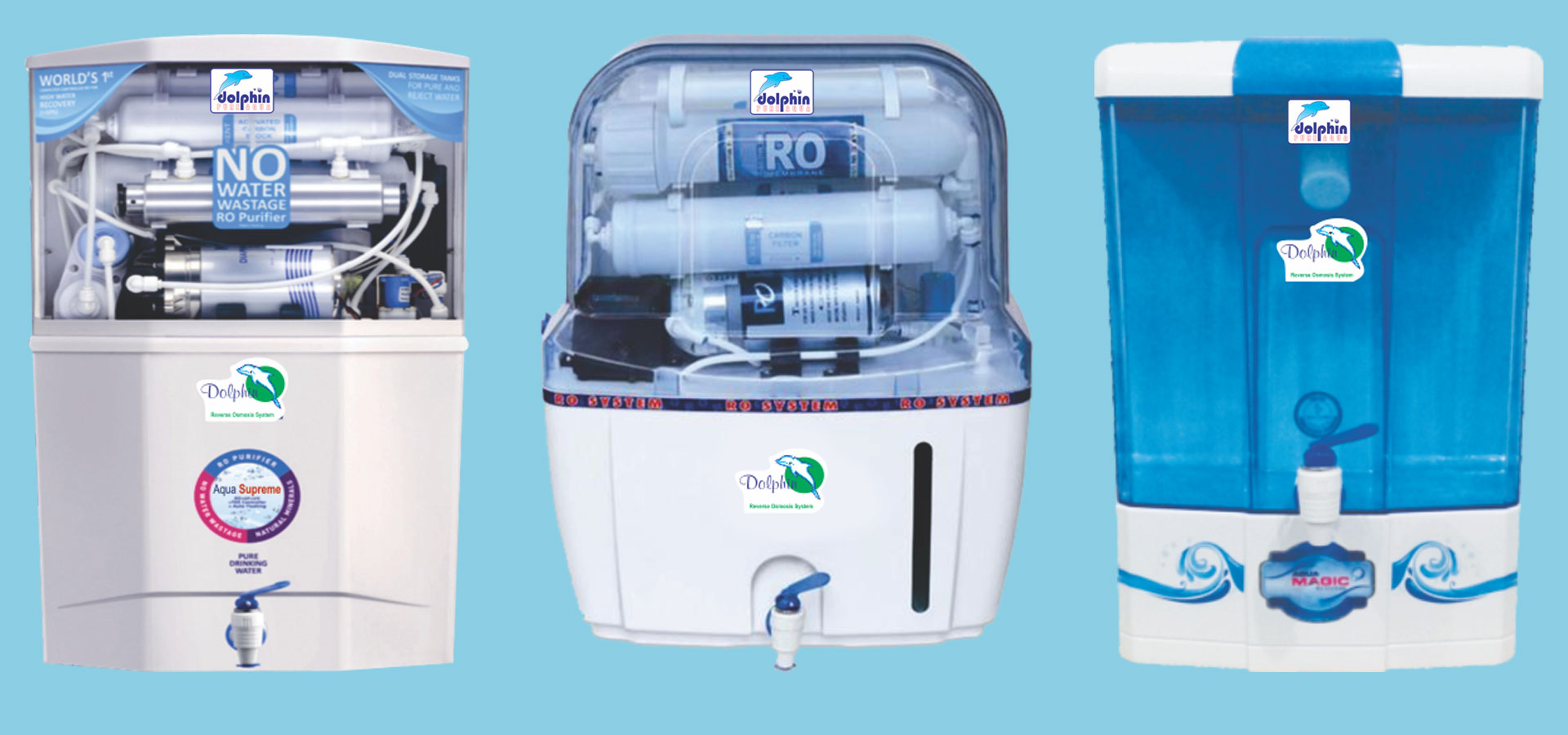 * Aqua Supreme* Swift* Aqua Magic
 * Crystal* Compaq* Natural