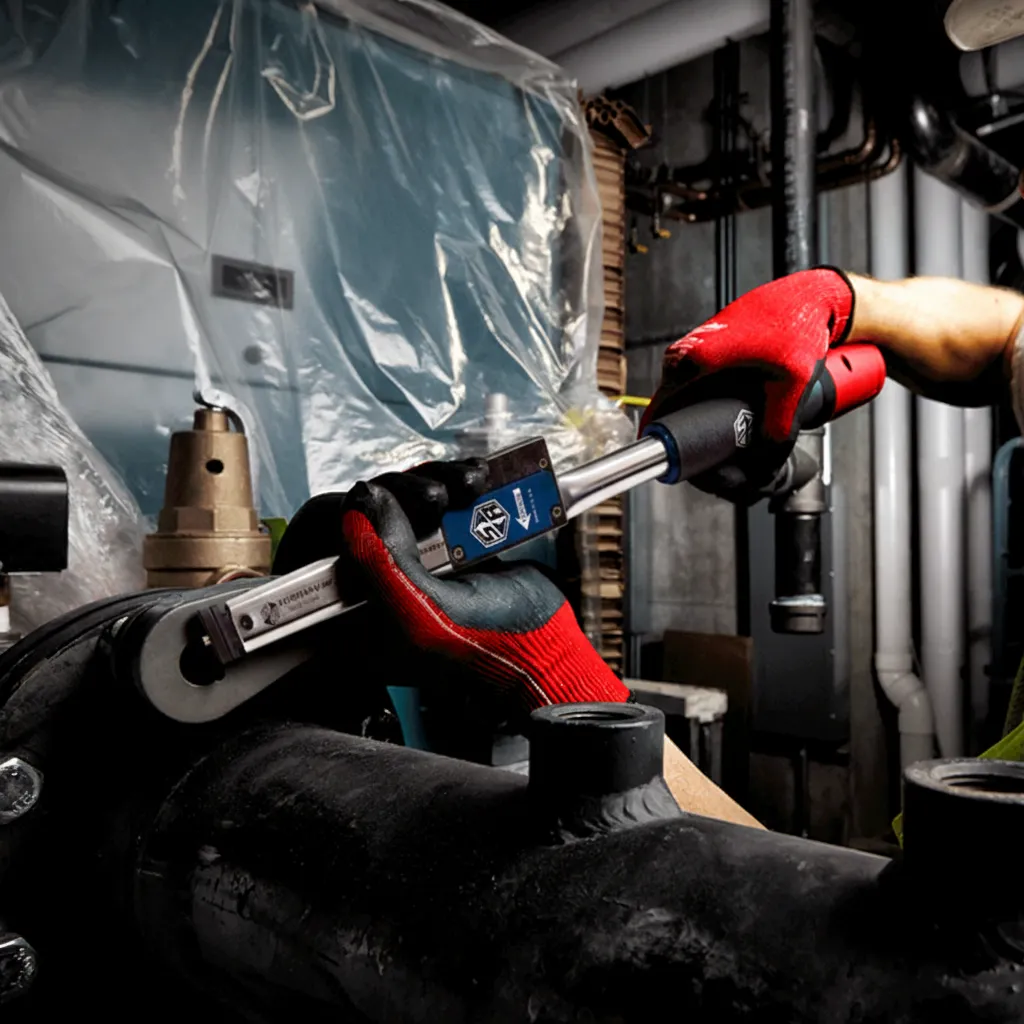
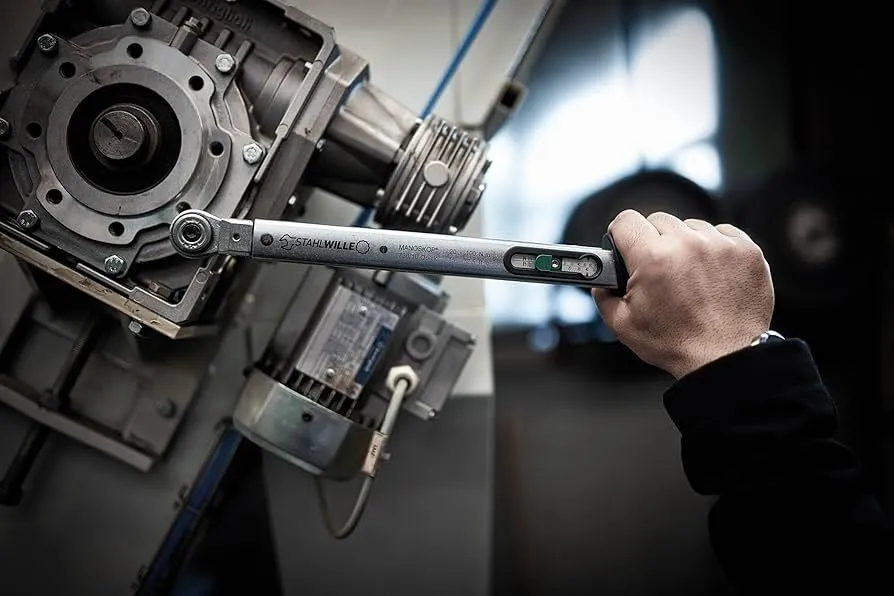
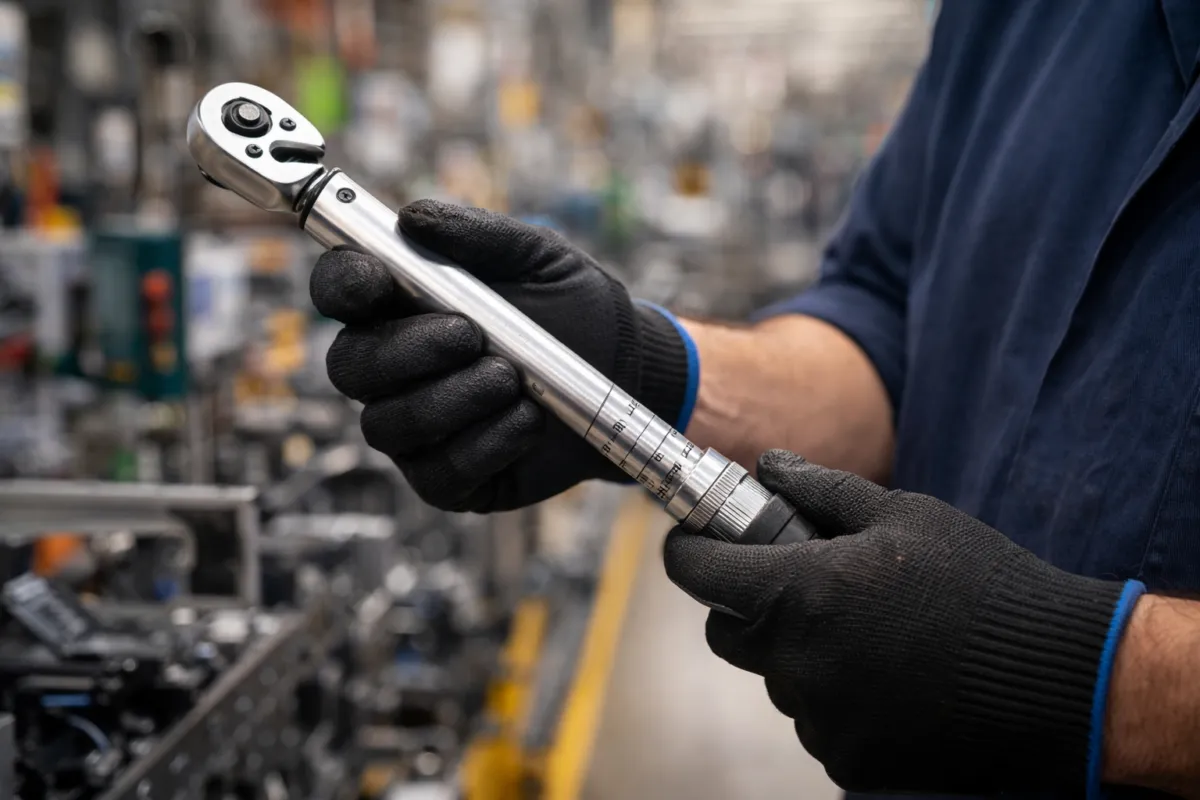
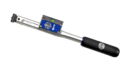
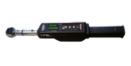
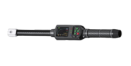
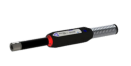
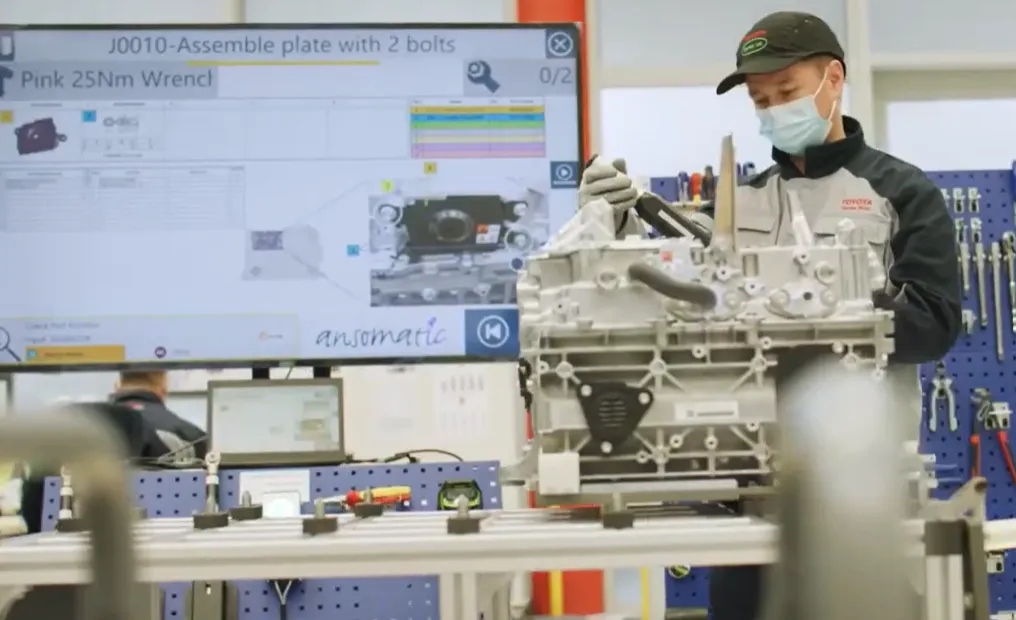
Modern manufacturing demands absolute fastening accuracy, full process traceability, and maximum operator safety. Our range of digital torque wrenches delivers precise, repeatable tightening for safety-critical industrial applications where traditional tools are no longer sufficient. Each digital torque wrench is equipped with advanced electronic measurement technology to verify every tightening operation in real time, ensuring that every joint meets the required specification while providing clear OK / NOK feedback to the operator.
In torque-controlled assembly environments there are two main categories of tightening tools: manual torque tools such as the digital torque wrench and motorized tools such as electric screwdrivers and nutrunners.
The fundamental difference is that a digital torque wrench relies on the operator’s manual force to tighten the joint while the tool precisely measures the applied torque, whereas an electric screwdriver uses its internal motor to generate digital torque automatically.
Because electric screwdrivers are designed for speed, they are much faster for running down fasteners in high-volume production. However, digital torque wrenches are significantly more accurate, making it the preferred solution when tightening quality, process reliability, and documentation are critical.
A digital torque wrench (also called an electronic torque wrench) is a hand-held tightening tool equipped with an internal electronic strain gauge. This sensor continuously measures torque and angle while the operator tightens the fastener.
Modern digital torque wrenches provide:
This makes the digital torque wrench ideal for applications where:
Electric torque wrenches offer significant advantages over manual, non-smart torque wrenches, making them the preferred choice for professional and industrial applications. A digital torque wrench provides higher accuracy and consistent torque measurement, thanks to its electronic sensors and clear digital display. Unlike a manual torque wrench, it reduces the risk of user error by giving real-time feedback and audible or visual alerts when the desired torque is reached.
Many electric drive torque wrenches also include data logging features, allowing users to record and track torque values for quality control and compliance. In addition, a digital torque wrench enables faster operation, easy unit conversion, and precise torque settings, improving efficiency and ensuring reliable results in critical fastening tasks.
A traditional click wrench uses a mechanical release mechanism that produces a loud click and a slight break in the handle when the preset torque is reached. This method is simple, but it can be difficult to hear in noisy factories and often causes wrist shock due to the mechanical release.
A vibrating electronic torque wrench replaces the mechanical click with electronic feedback. Inside the tool, an electronic strain gauge measures the applied torque continuously and, when the target torque is reached, the handle vibrates strongly while an LED ring changes color, typically green for accepted and red for rejected joints. Because there is no mechanical break, the operator simply feels the vibration and stops pulling, which greatly improves ergonomics, reduces wrist strain, and prevents over-tightening. This makes the vibrating digital torque wrench especially effective in noisy production environments where audible signals are unreliable and where consistent fastening quality is essential.
Choosing the right digital torque wrench depends on how the tool will be used and the level of control, accuracy, and torque monitoring required within your process. Whether you are selecting an digitaltorque wrench for quality control or an electric torque wrench for production, understanding your application is key to making the right decision.
The first step is to determine if the tool will be used in a production environment or for inspection. Production applications often require advanced functionality such as programmable tightening strategies, torque-and-angle control, and integration with factory systems. In these cases, an electric drive torque wrench combined with a controller enables centralized management, real-time torque monitoring, and full traceability across multiple tools.
Another important consideration is accuracy and data capture. Standard applications may only require basic OK/NOK feedback with repeatability around ±4%, while safety-critical environments demand higher precision (±1%) and complete data logging of torque and angle values. Selecting the correct digital torque range is also essential to ensure the tool operates within its optimal performance window for your specific application.
Operator feedback and usability should also be evaluated. Some users prefer a traditional click-based digital torque wrench, while others benefit from vibration or visual feedback, especially in noisy environments where clear operator guidance improves consistency.
Finally, consider power supply and connectivity options such as USB charging, rechargeable batteries, or charging cradles, as well as communication technologies like RF, Bluetooth, or Wi-Fi. These features are particularly important when integrating an electronic torque wrench into a broader manufacturing or quality system.
Ultimately, the choice is driven by application complexity: standalone tools are ideal for simpler tasks, while connected systems with advanced torque monitoring and control are essential for high-volume production environments where accuracy, traceability, and efficiency are critical.
Learn more about how to choose the right electric screwdriver for your application.
Production environments
Require advanced features such as:
👉 Best fit: Electric drive torque wrench + controller
Enables real-time monitoring, centralized control, and full traceability.
Inspection / quality control
👉 Best fit: Standalone digital torque wrench
Learn more about how to choose the right electric screwdriver for your application.
Title:
FashionLand FDMI‑A022 (MP4): The Must‑Watch Video That’s Redefining Tomorrow’s Street Style
Meta Description (150 characters):
Discover why FashionLand FDMI‑A022 is the most buzzed‑about fashion video of 2024—trend‑setting looks, immersive visuals, and a soundtrack you’ll never forget.
The video is a visual runway that fuses live‑action models, motion‑capture avatars, and AI‑generated textile patterns. Its narrative is simple yet powerful: “Style is the language we speak when words fail.”
| Metric | Value | Insight | |--------|-------|--------| | YouTube Views (first 7 days) | 2.1 M | Strong organic reach | | Average View Duration | 2 min 45 s (≈ 85 % of video) | High engagement | | Twitter Mentions | 12 k (sentiment +94 %) | Positive buzz | | Pinterest Saves | 8 k “Outfit Ideas” boards | Long‑tail discovery potential |
You now have a complete, polished content package for “FashionLand FDMI‑A022 (MP4).” Use it to drive traffic, spark conversation, and convert viewers into buyers. Happy publishing! 🎉
If this file relates to a new digital fashion drop, metadata for a virtual runway, or an NFT collection, the post should focus on the intersection of technology and style.
Headline: Decoding FashionLand: The Digital Evolution of fdmia022 fashionlandfdmia022mp4
Key Point: Discuss how video formats like .mp4 are becoming the new "runway" for virtual designers. Vibe: Modern, tech-savvy, and forward-looking. Option 2: The Underground/Indie Brand Spotlight
If this is a video file from an emerging indie label or a specific fashion show (perhaps "fdmia" stands for a specific Fashion Design event in Miami or similar), the post should be a collection review.
Headline: First Look: The Raw Aesthetic of fashionlandfdmia022
Key Point: Focus on the visual storytelling, color palettes, and the "vibe" captured in the footage. Vibe: Artistic, exclusive, and trend-focused. Option 3: A "Behind the Scenes" Production Log
If you are a creator or editor working with this specific footage, the post can serve as a production diary.
Headline: Editing the Edit: Bringing fashionlandfdmia022 to Life The video is a visual runway that fuses
Key Point: Talk about the process of capturing high-end fashion visuals and the technical work behind the final video. Vibe: Professional, instructional, and personal.
Could you tell me a bit more about what is in the video? Once I know if it’s a runway show, a street style compilation, or a digital art piece, I can draft the full text for you.
Because this specific string does not return results in standard databases or search engines, a "helpful guide" would depend on what that file actually contains. To help you better, could you clarify where you encountered this name?
If you are looking for general fashion guidance or how to handle specific media files, here are common paths:
Fashion Industry Trends: If "Fashionland" refers to a specific brand or event (like a runway show), you might be looking for a recap of seasonal trends or styling tips.
File Handling: If you have an .mp4 file with this name and cannot open it, ensure you are using a versatile media player like VLC Media Player or checking for file corruption. You now have a complete, polished content package
Content Creation: If this is a template name for a video editing project, you may need a guide on using software like Canva or Adobe Premiere to customize the footage.
Please provide a bit more context about where this term came from so I can give you a more targeted guide!
If you're looking for information on a specific topic related to fashion or a video with this name, could you provide more details or clarify your request? That way, I can offer a more accurate and helpful response.
| Theme | Visual Cue | Why It Matters | |-------|------------|----------------| | Digital‑Nature Fusion | Models walking through a glowing, neon‑lit forest of projected leaves | Highlights the brand’s commitment to bio‑synthetic fabrics and eco‑forward design | | Cultural Remix | Quick‑cut montages of graffiti from Seoul, Lagos, and São Paulo | Positions FashionLand as a global, inclusive voice in streetwear | | Future‑Tech Wardrobe | Real‑time AR overlays that transform garments mid‑walk | Showcases the interactive, modular clothing line (e.g., detachable sleeves, color‑changing fabrics) |
The original score, titled “Neon Pulse”, was composed by Luca Romano and features a blend of synthwave, Afro‑beat percussion, and a subtle violin motif. The track has already entered Spotify’s “Viral 50 – Global” chart, driving additional traffic back to the video.
Social Proof: Over 350,000 TikTok videos have used “Neon Pulse” as background music, most featuring users recreating the outfit looks.
| Digital Click Torque Wrenches | Digital Vibrating Torque Wrench | ||||||
| Type | Sturtevant Richmont | Sturtevant Richmont | BMS Torque Solutions | NovaTork | Stahlwille | NovaTork | Crane |
| Brand | |||||||
| Model | ![]() | ![]() | ![]() | ![]() | ![]() | ![]() | ![]() |
| Brand Name | SLTC 2.4 GHz Click Wrench | TAC 2 Click Wrench | Smart Click Wrench | Preset Torque Wrench | Manoskop 766 ADAPTIQ | QC Torque Wrench | WrenchStar Multi Torque Wrench |
| Covering Range | 0,6…813Nm | 0,6…204Nm | 20…160Nm | 4…300Nm | 1…1000Nm | 0,6…1000Nm | 1…1500Nm |
| Number of models | 9 | 5 | 2 | 6 | 10 | 8 | 11 |
| Number of presets | 1 | 1 | 1 | 1 | 1 | unlimited | unlimited |
| Repeteability | +/-4% | +/-4% | +/-4% | +/-4% | +/-4% | +/-1% | +/-1% |
| Monitoring | click OK/NOK | Torque & Angle data | Torque & Angle data | Torque & Angle data | Torque & Angle data | Torque & Angle data | Torque & Angle data |
| Charger | rechargeable batteries | Charger Craddle | rechargeable batteries or USB | rechargeable batteries or USB | rechargeable batteries or USB | rechargeable batteries or USB | Charger Craddle |
| Communication | 2.4GHz RF | 2.4GHz RF | BlueTooth | WiFi | RF or BlueTooth | WiFi | 2.4GHz RF |
| Controller | Global 400 | Global 400 | None | None | DAPTIQ | None | TCI-2 Lineside |
![]() | ![]() | N/A | N/A | N/A | N/A | ||
| Controller capacity | up to 16 wireless wrenches | up to 16 wireless wrenches | N/A | N/A | N/A | up to 5 wireless wrenches | |
| Application | Production torque wrench | Production torque wrench | Production torque wrench | Production torque wrench | Production torque wrench | Qualiti Control Torque Wrench | Production Torque Wrench |
While specifications such as torque range and brand are useful, the most important differences between digital and electronic torque wrenches come down to three practical factors: control, accuracy, and flexibility.
First, consider whether the tool operates with or without a controller. Controller-based systems enable centralized torque monitoring, process control, and full traceability across multiple tools, making them essential for production environments. Standalone tools, on the other hand, are better suited for simpler applications or quality inspections where system integration is not required.
Second, accuracy has a direct impact on application suitability. Tools with ±4% repeatability are typically sufficient for general assembly, while applications in automotive, aerospace, or other safety-critical industries often require ±1% accuracy to guarantee consistent tightening results.
Finally, the number of presets determines how efficiently operators can handle multiple tasks. Single-preset tools are ideal for repetitive operations, whereas tools with multiple or unlimited presets allow quick switching between different tightening programs, supporting more complex and variable production processes.