Official DE OpenBlackHole BH 1.4
image including patches, DTS Surround, DVB-T Automatic, CrossEPG, Cron, WebInterface
working and Inadyn, DynDNS plugins preinstalled.
Our Support Forum : www.japhar.com

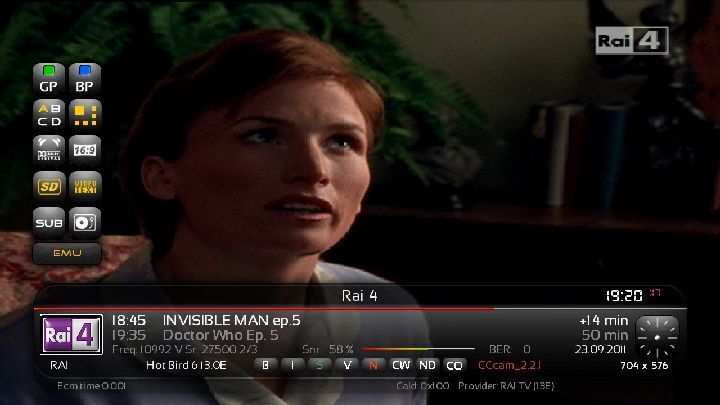
Description of Features of DE OpenBlackHole BH 1.4
- Auto DVB-T
- DTS Surround
- CrossEPG Plugin (0.6.2 svn 305)
- DynDNS Plugin
- Inadyn Plugin
- Cron
- BlackHole GUI
a) Showing InfoBar CAS infos
b) BluePanel
c) AutoCam
d) Extra Settings Menu e) Cron Manager
f) Osd Settings (set Picons to LCD)
g) Devices Manager
h) Kernel Modules Manager
i) Fast Plugin Settings]
j) GreenPanel
k) Script Manager
l) System Setup : Show Event-progress in channel selection
...
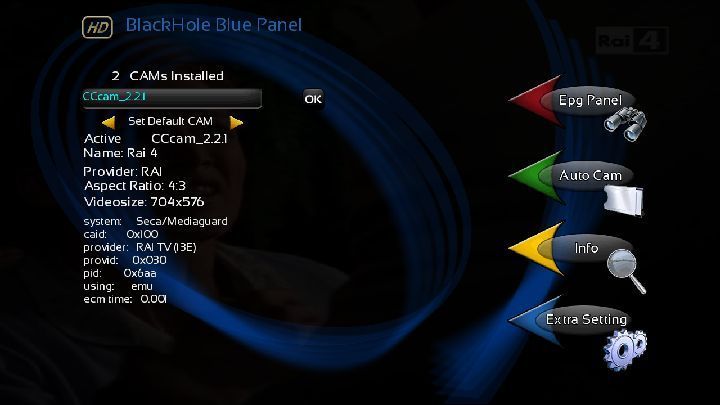
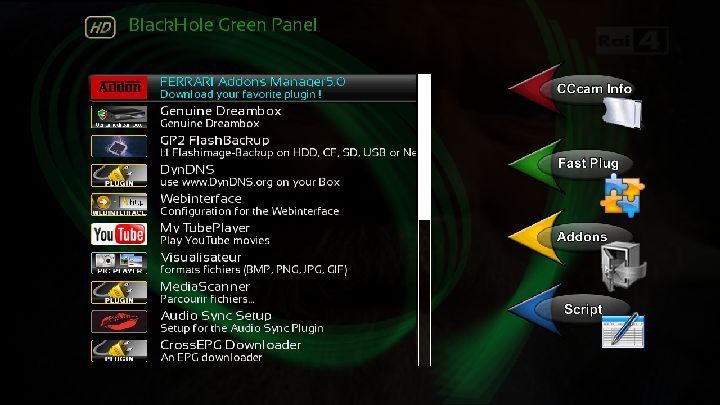
P.S.: After installation and regularly, install the latest patch available on the Addon Manager Panel to have latest functionnalitites active and fully working.
DM800se (Japhar Sim) : Download here
or From datafilehost.com or from MEGA
DM800se (Ferrari) : Download here
or From datafilehost.com or from MEGA
DM800se (Sim2 box) : Download here
or From datafilehost.com or from MEGA
DM800se (eStar Sim) : Download here
or From datafilehost.com or from MEGA
DM800se (Original box) : Download here
or From datafilehost.com or from MEGA
DM500HD (Japhar Sim) : Download here
or From datafilehost.com or from MEGA
DM500HD (Ferrari) : Download here
or From datafilehost.com or from MEGA
DM500HD (Sim2 box) : Download here
or From datafilehost.com or from MEGA
DM500HD (Original box) : Download here
or From datafilehost.com or from MEGA
DM8000 (Japhar Sim) : Download here
or From datafilehost.com or from MEGA
DM8000 (Ferrari) : Download here
or From datafilehost.com or from MEGA
DM8000 (Original box) : Download here
or From datafilehost.com or from MEGA
DM800 (Japhar Sim) : Download here
or From datafilehost.com or from MEGA
DM800 (Ferrari) : Download here
or From datafilehost.com or from MEGA
DM800 (Sim2 box) : Download here
or From datafilehost.com or from MEGA
DM800 (Original box) : Download here
or From datafilehost.com or from MEGA
DM800 (Release Praline Sim 1.0 SSL70) : Download here
or From datafilehost.com or from MEGA
DM800 (Release Praline Sim 1.0 SSL69) : Download here
or From datafilehost.com or from MEGA
DM7025/+ Mips (SSL83) : Download here
or From datafilehost.com or from MEGA
VU+ Solo (Ferrari v2) : Download here
or From datafilehost.com or from MEGA
VU+ Solo (Ferrari Kernel v3.1.1) : Download here
or From datafilehost.com or from MEGA
VU+ Solo (Ferrari Image v3.2) : Download here
or From datafilehost.com or from MEGA
VU+ Solo2 (Ferrari) : Download here
or From datafilehost.com or from MEGA
VU+ Uno (Ferrari) : Download here
or From datafilehost.com or from MEGA
VU+ Duo (Ferrari) : Download here
or From datafilehost.com or from MEGA
Exhibition Catalogue -
Often dismissed as mere merchandise or academic supplements, the exhibition catalogue occupies a unique and potent position within the art world. It serves a dual identity: it is both a historical document of a transient event and a creative extension of the artist’s vision. This report analyzes the evolution of the exhibition catalogue, exploring its transition from a dry inventory list to a highly collectible "artist’s book," and evaluates its critical role in art history, curation, and the secondary market.
This is the heart of the book. It is not a review of the show, but an original piece of scholarship. It frames the artist's work within a broader cultural, political, or aesthetic movement. For group shows, it explains why these specific artists were brought together.
For curators and gallerists embarking on this journey, here is a checklist for success.
This often-overlooked section is a spreadsheet of truth. It lists every piece in the show, even those not photographed. For serious researchers, the checklist is a vital tool for tracking location and ownership. EXHIBITION CATALOGUE
To return to our original question: Why the exhibition catalogue? Because art is physical. An installation exists in real space. A JPEG collapses that space into a flat, backlit box. The catalogue—with its weight, its paper grain, its smell of ink, and its duty to history—collapses the exhibition into a sacred object that you can hold.
Whether you are a painter preparing for your first solo show or a curator organizing a biennial, remember: The exhibition lasts six weeks. The walls will be repainted. The art will ship away. But the catalogue remains on the shelf, waiting for a scholar in 2100 to open it and discover exactly what you did.
Invest in the catalogue. It is your exhibition’s immortality. Often dismissed as mere merchandise or academic supplements,
Call to Action: Are you planning an upcoming show? Download our free "Exhibition Catalogue Pre-Production Checklist" to ensure you don't miss a single deadline, from photography to the final proof.
An exhibition catalogue review typically assesses a publication created to accompany an art or historical exhibition. These reviews evaluate how well the book documents the show, the quality of its scholarly essays, and its effectiveness as a lasting record of a temporary event. 🎨 What is an Exhibition Catalogue?
Definition: A structured record combining images, scholarly text, and metadata. Call to Action: Are you planning an upcoming show
Function: To provide in-depth understanding of the artists' work and the curator’s vision.
Contents: Includes bibliographies, artist interviews, curator essays, and high-quality reproductions of displayed works. ✍️ Key Elements of a Review
Reviewers typically focus on specific criteria to determine the value of the publication: The Aerodrome exhibition catalogue: a review - Ikon Gallery
This is a specification for a standalone, conceptually complete exhibition catalogue essay (often the “solid piece” required for a catalog). It is written as a curatorial statement that could anchor a contemporary exhibition.
For support click on the LINK below
LINK